

Long-term friends, long-term books.
Joe Haldeman: The Forever War.
(…) the alienation experienced by the soldiers on returning to Earth – here caused by the time dilation effect – becomes a clear metaphor for the reception given to US troops returning to America from Vietnam, including the way in which the war ultimately proves useless and its result meaningless.
K-HOLE #5: A report on doubt (via Ingrid Burrington).
Seeing the future ≠ changing the future.
Relevant: How We Misremember the Internet’s Origins.
Liebe, liebe, liebe lei.
Raffaella Carrà: A far l’amore comincia tu.
Bov Bjerg: »Die Perspektive von unten ist einfach die interessantere«.
Es gibt keine Bildungsgerechtigkeit oder was auch immer, davon sind wir echt weit entfernt. Da mache ich mir auch überhaupt keine Illusionen. Einzelne schaffen es und die müssen dann herhalten als Beispiel dafür, dass es ja gar nicht so ungerecht ist.
Obsidian: A knowledge base that works on local Markdown files.
Mi bin stap long ples ia bifo.
Bislama (…) is an English-based creole language and one of the official languages of Vanuatu.
Wednesday is frighteningly dull.
(…) this version of Wednesday is the epitome of what fandom circles call a “Mary Sue”: Everyone she meets becomes instantly fascinated by her, and she’s skilled at everything she tries—cello, martial arts, fencing, novel-writing, archery, and botany, to name a few.


VintageLoveMunich – Stylish design classics and vintage curiosities.
Hey, we are Hedi and Mark. A couple living in the beautiful city of Munich. Mark is an Interior Architect and Hedi works as Graphic Designer/Illustrator. We both share the love for design classics and vintage curiosities. Stay tuned because we can’t wait to share our finds with you.
The stuff uncovered in the Twitter whistleblower report is much crazier than anything in the "Twitter files" but it's much less politically/tribally salient so it got no attention. Going to do a thread on some of the craziest things, in no particular order.
— Avid Halaby (@AvidHalaby) December 12, 2022
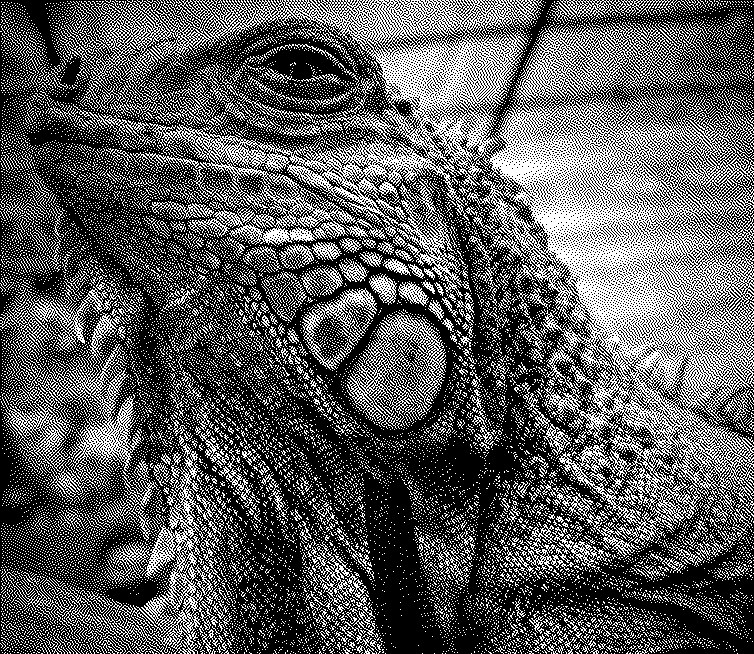
Pixel Accurate Atkinson Dithering for Images in HTML.
Actually including dithered images on the web is fraught with issues. Dithering relies on a precise correspondence between the source image pixels and the display pixels – any attempt to resize a dithered image is going to be either blurry or covered in distracting Moiré patterns. The browser is actively working against us here – it resizes images in a way that makes sense for most images but totally destroys the sharp dithering effect I am going for.